IUPAC Name
2,3-Dihydroxypropyl abieta-7,13-dien-18-oate
Cas Number
8050-31-5
HS Code
3806.90.90
Formula
C23H36O4
Appearance
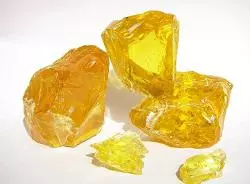
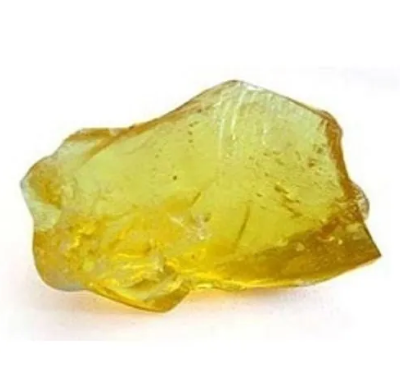
Yellow to Pale Amber-Coloured Solid
Common Names
Ester Gum, Glyceryl 1-abietate, Foral 85
Packaging
25 Kg Bag
Brief Overview
Glycerol rosin esters are formed by the reaction of the carboxylic acid group of rosin acid with glycerol. Glycerol rosin esters differ in property and application depending on the source of rosin acid. There are three sources from which rosin acids can be derived, which are gum, wood, and tall oil rosin. These rosin acids are collected from stumps of longleaf pine trees. Glycerol ester of gum rosin is a hard, yellow to pale amber-colored solid which is insoluble in water but soluble in acetone. They are used as emulsifiers and density adjustment agents for flavoring beverage oils. It is a complex mixture of tri- and di-glycerol esters of resin acids from gum rosin, with a residual fraction of mono-glycerol esters.
Manufacturing Process
Glycerol ester of gum rosin is obtained by the esterification of refined gum rosin under a nitrogen atmosphere with food-grade glycerol and purified by counter-current steam distillation. The refined gum rosin used for manufacturing glycerol ester of gum rosin is obtained by extracting oleoresin gum from living pine trees and refining it through washing, filtration, and distillation. Wood rosin is obtained by the solvent extraction of aged pine stumps, whereas tall oil rosin is a by-product of Kraft (paper) pulp processing.
Food Industry
The main function of glycerol rosin ester in food and beverages is to keep oils suspended or mixed evenly in water. It acts as a thickening agent in ice creams and chewing gum. It is even used as an ingredient to provide a pleasant and authentic fruit flavor in water-based beverages.
Cosmetic Industry
Glycerol rosin ester is used in the cosmetic industry as an emulsifier, stabilizer, and thickener.
Paint and Coating Industry
Glycerol rosin Esters is used in product lacquer furniture, varnish, hammer finish, metallic paint, and ink. It is used as a pressure-sensitive adhesive in the paint and coating industry.